


Portal Configuration & Optimization
Run HubSpot Like a Well-Oiled Machine
We find the inefficiencies, fix them, and hand you back a portal your team can actually rely on.
We’ll teach you how to use it, too.
Book a Call
We Hate Unoptimized Portals
A Portal That Almost Works Is a Portal That Doesn't Work
HubSpot portals tend to degrade over time while your team’s frustration keeps going up.
The Problem
 The solution
We deduplicate workflows and create a clean CRM experience.

Workflows get duplicated and nobody notices until an email goes out twice.
We run a full system diagnostic to find the root causes, not just the symptoms.
Properties are created for one-time campaigns and never cleaned up.
We consolidate redundant properties and clean up your data model.
Integrations start behaving strangely, creating silent data errors.
We rebuild and stress-test broken workflows and integrations.
The team adjusts their process around the bugs instead of fixing them.
We hand back a portal configuration your team can actually rely on.
The portal becomes something your team tolerates rather than trusts.
How We Approach Portal Configuration & Optimization
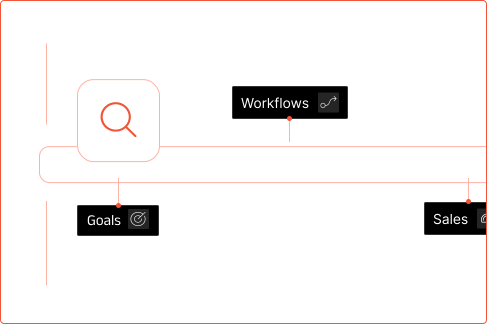
Step 01
Full System Diagnostic
We audit the entire portal, including your data model, property hygiene, workflow logic, integration health, reporting structure, and user adoption patterns.
Step 02
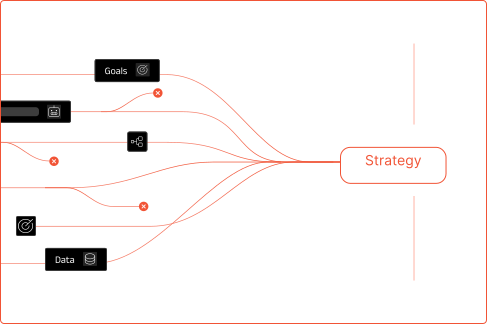
Root Cause Analysis
We trace problems to their source rather than patching the symptoms. We find where the problem actually starts so that we can rebuild a portal that works for you and your team.
Step 03
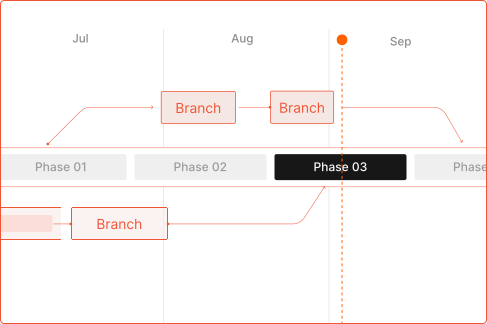
Impact-Based Prioritization
We rank every issue by what it's costing you in time, trust, or revenue. We fix the highest-impact items first so you see results quickly rather than waiting for a perfect portal at the end.
Step 04
Portal Testing
We rebuild properties, consolidate redundant fields, and restructure workflows in a test environment before anything touches your live portal.
Step 05
Clean Handoff with Full Context
We hand the portal back with a clear record of everything that changed, why it changed, and what to watch for going forward so your team can maintain it properly.
.aLIWkZ6q.svg)
Step 01
Full System Diagnostic
We audit the entire portal, including your data model, property hygiene, workflow logic, integration health, reporting structure, and user adoption patterns.
Step 02
Root Cause Analysis
We trace problems to their source rather than patching the symptoms. We find where the problem actually starts so that we can rebuild a portal that works for you and your team.
Step 03
Impact-Based Prioritization
We rank every issue by what it's costing you in time, trust, or revenue. We fix the highest-impact items first so you see results quickly rather than waiting for a perfect portal at the end.
Step 04
Portal Testing
We rebuild properties, consolidate redundant fields, and restructure workflows in a test environment before anything touches your live portal.
Step 05
Clean Handoff with Full Context
We hand the portal back with a clear record of everything that changed, why it changed, and what to watch for going forward so your team can maintain it properly.
Results
The Impact of a Clean Portal
The goal of a portal optimization is to build a system that your team trusts enough to use consistently.
This is what makes everything else in your business run smoother.
.DDk2Sgcy.svg)
Automation That Delivers
The workflows that were supposed to save your team time finally do, reliably and without manual intervention.
.BsQsmk3Z.svg)
Reports You Can Act On
Clean, consolidated data means your dashboards reflect reality and your team can make decisions without referencing spreadsheets.
._0ZNeoYW.svg)
A Team That Logs Back In
When the portal works the way it should, your team stops avoiding it. Adoption goes up because the friction is gone.

No More Accepted Quirks
The workarounds and manual patches your team built around broken processes simply aren't needed anymore.

Recovered Time
Hours per week that were going toward manual data entry, reconciliation, and workaround management go back to actual work.

Don't Just Take Our Word For It
HubSpot Optimization Success Stories
Partnering with Bryant Works was a game changer! Their expertise and strategic approach have been invaluable.
Valentina ArtunduagaCreative Operations Manager @ storyarb - CASE STUDY
- B2B Content Marketing
Revenue Reporting
Bryant Works' strategic implementation of HubSpot solutions transformed storyarb's operational capabilities, providing the tools and insights necessary for sustainable growth.
Read case studyBryant Works was the right choice. It's clear they actually care about setting you up for success.
Ellery FinkHead of Customer Experience @ Vori - CASE STUDY
- SAAS
HubSpot Customer Onboarding
Through thoughtful collaboration and expert implementation, Bryant Works helped Vori turn an underperforming HubSpot instance into a powerful onboarding engine.
Read case studyThe team was responsive, strategic, and genuinely easy to work with. Bryant Works helped us hit a critical milestone with confidence.
Kevin KeithVP of Sales & GTM Strategy @ RedBeam - CASE STUDY
- SAAS
Website Relaunch
From day one, Bryant Works prioritized alignment. The team didn't overcomplicate the process — they leaned into what mattered most: speed, quality, and communication.
Read case study






Next Steps
Ready to Get the ROI You Were Promised?
Let's run a diagnostic and find out exactly what's holding your portal back.





FAQs About HubSpot Consulting

What does a HubSpot portal audit actually cover?
A thorough audit covers your entire HubSpot ecosystem: the data model and property structure, workflow logic and automation health, integration performance, reporting accuracy, and how your team is actually using the platform day to day. We look at everything, not just the areas you've already identified as problematic.
How do you decide what to fix first?
We prioritize by business impact. If a broken workflow is preventing leads from reaching your sales team, that gets fixed before we address cosmetic issues like unused properties. We share our prioritization with you before we start so you know exactly what's being addressed and in what order.
Will the optimization process disrupt our active campaigns or sales operations?
No. We plan every change before it happens and test complex workflow adjustments before deploying them to your live portal. We also communicate clearly with your team about timing so that cleanups and reconfigurations happen without interrupting active campaigns or open deals.
Why do portals get this messy in the first place?
It's more common than most teams realize. Portals accumulate technical debt through employee turnover, rapid growth, integrations added without a clear strategy, and the natural tendency to create a quick fix rather than a proper solution. Over time, those quick fixes stack up into something that's genuinely difficult to work in.
Is this a one-time project or can you provide ongoing support?
Both options are available. Many clients start with a comprehensive cleanup project and then retain us for ongoing portal management to keep things from degrading again. Others prefer to handle maintenance internally after we've established a clean baseline. We're flexible based on what makes sense for your team.
Will we lose historical data during the cleanup process?
No. Data preservation is a priority during any optimization project. When we consolidate duplicate properties or clean up messy records, we merge the data safely so you retain your historical context while getting a much cleaner portal to work in.
How long does a typical portal optimization take?
The timeline depends entirely on the size of the portal and the amount of technical debt it has accumulated. A focused audit and cleanup of a single Hub might take 3 to 4 weeks, while a comprehensive optimization of an enterprise portal spanning Marketing, Sales, and Service hubs could take 8 to 12 weeks.
Do you train our team on the changes you make?
Yes. A clean portal is only useful if your team knows how to use it. We provide documentation and contextual training on any new processes, consolidated properties, or updated workflows so your team understands the new system and doesn't revert to old habits.
Can an optimization project fix our reporting issues?
Absolutely. In fact, broken reporting is usually the symptom that drives companies to seek an optimization in the first place. By fixing the underlying data model and enforcing clean data entry, we restore the accuracy of your dashboards and reports.
What if we don't know exactly what's wrong with our portal?
That is exactly why we start with a comprehensive diagnostic audit. You don't need to know the root cause of the problem, you just need to know that the system isn't performing the way it should. We will find the technical debt, document it, and present a plan to fix it.